Bingo Odds and Probability: Your Real Chances of Winning in 2026
How often do you actually win at bingo? Most players have a vague sense — but few have looked at the actual math.
Understanding bingo odds and probability isn’t just academic. It shapes how you think about bankroll, session length, and stakes selection — and it reveals whether a bingo app is genuinely skill-based or just luck with extra steps.
1. Basic Bingo Probability
A standard 75-ball bingo game uses 75 numbered balls (B1–B15, I16–I30, N31–N45, G46–G60, O61–O75) and a 5×5 card with 24 active squares plus one FREE center space.
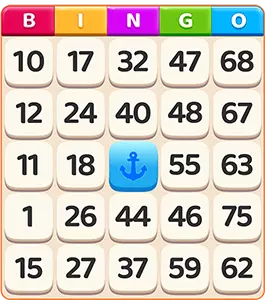
With 1 card and 1 opponent, you each start at 50% win probability. That’s the symmetry of pure luck-based bingo. But real-money games involve more players — and skill layers that fundamentally alter the math.
2. How Many Balls to Complete a Pattern?
| Balls Called | Probability of at Least One Bingo |
|---|---|
| 20 balls | ~5–15% (many players) |
| 30 balls | ~25–40% |
| 43 balls | ~50% — median game length |
| 55 balls | ~80%+ |
| 75 balls | 100% |
The median single-line bingo happens around 43 balls. Full House (all 24 squares) typically requires 60–70 balls.
In Bingo Gold Cash’s 90-second format, roughly 30–50 balls are called per game. The competition is compressed — every early daub carries significant weight.
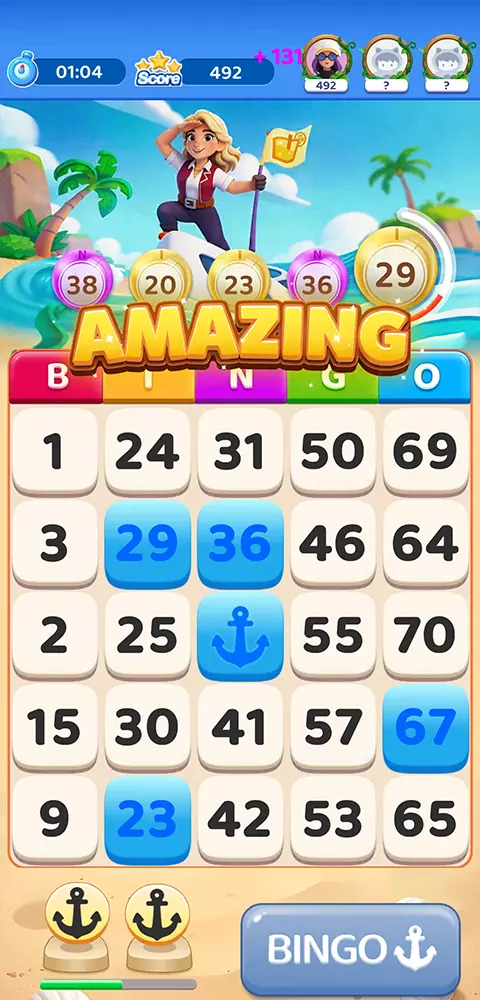
3. Win Odds by Number of Players
In a pure luck-based game, your odds are simple math:
| Players | Your Win Odds (1 card each) |
|---|---|
| 2 | 50.0% |
| 5 | 20.0% |
| 10 | 10.0% |
| 25 | 4.0% |
| 50 | 2.0% |
This model breaks down once skill is introduced. In a skill-based game, players in the top 20% of performance don’t win 20% of games — they win meaningfully more, because they consistently outperform lower-skilled opponents. That’s the mathematical case for why skill-based bingo is a genuine competitive format.
4. Bingo Gold Cash Pattern Probability
Different patterns have different difficulty levels. Bingo Gold Cash uses 4 pattern types — all within the 75-ball, 5×5 format:
| Pattern | Squares Needed | Avg. Balls to Complete |
|---|---|---|
| Single Line (horizontal/vertical/diagonal) | 5 | ~30–43 balls |
| Four Corners | 4 | ~35–50 balls |
| Full House (all 24 squares) | 24 | ~65–75 balls |
Scoring per pattern:
- BINGO (each line / four corners): 1,000 points
- Full House: 10,000 points
- Multi-BINGO within one game earns multiplied bonuses
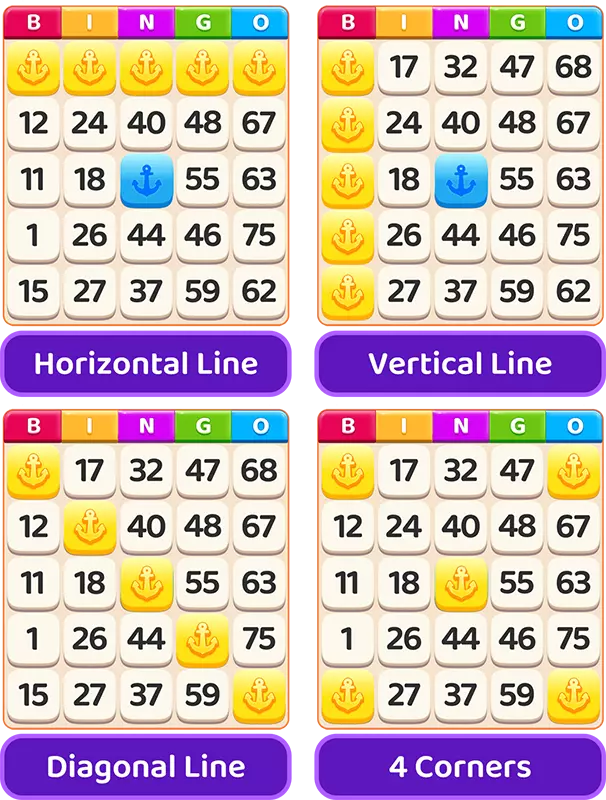
The strategic insight: patterns share squares. A player who plans their daub sequence to build toward multiple patterns simultaneously will outscore one chasing a single line. Patterns running through the FREE center square (N column) are statistically easier to complete — prioritize those when possible.
5. How Skill Changes Your Odds
In traditional bingo, probability is fixed by math. In skill-based bingo, probability is modified by performance.
Theoretical Win Rate in a 10-Player Tournament
| Skill Level | Luck-Based Win Rate | Skill-Based Win Rate (Est.) |
|---|---|---|
| Bottom 20% | 10% | ~3–5% |
| Average | 10% | ~8–10% |
| Top 20% | 10% | ~20–25% |
| Top 5% (expert) | 10% | ~30–40% |
Speed Scoring: The Compounding Advantage
Bingo Gold Cash awards 100–140 points per daub, scaled by reaction speed:
- Expert player: 135 pts/daub × 24 daubs = 3,240 speed points
- Average player: 112 pts/daub × 24 daubs = 2,688 speed points
- Difference: 552 points — more than half a completed BINGO pattern
An expert can overcome missing one pattern through consistently faster daubs alone. This is skill changing mathematical outcomes.
6. Expected Value: The Real Financial Picture
Expected Value (EV) tells you how much you expect to gain or lose per game on average.
EV Formula
EV = (Win Probability × Prize) − (Loss Probability × Entry Fee)
Example: $1.00 Entry, 10 Players, 15% Rake
Total prize pool = $1.00 × 10 × 85% = $8.50
| Player Type | Win Rate | EV per Game |
|---|---|---|
| Average player | 10% | (10% × $8.50) − (90% × $1.00) = −$0.05 |
| Top-tier player | 30% | (30% × $8.50) − (70% × $1.00) = +$1.85 |
The average player loses $0.05 per game (cost of entertainment + house edge). Atop−tier player earns $1.85 per game. The same mathematical structure that costs average players money makes skilled players profitable — because you’re competing against other players, not the house.
7. Practical Takeaways for Bingo Gold Cash Players
1. Establish your baseline before raising stakes. Play free or low-entry games until you have 50+ results. If you’re consistently in the bottom half, moving to higher stakes amplifies losses — it doesn’t fix your odds.
2. Speed is the variable you control. Every 5-point improvement in average daub speed adds real points. Time spent practicing speed is time spent directly improving your win probability.
3. Choose tournament size strategically. Smaller fields (3–5 players) mean higher per-win value but fewer chances. Larger fields (20+ players) offer more opportunities to leverage skill advantage over weaker opponents. Match tournament size to your confidence level.
4. Track your results. 50–100 games gives you a preliminary read on your win rate. 200–500 games gives a reliable picture. Short-term variance in bingo is significant — don’t change strategy based on a 10-game sample.
FAQ
Q: What are my chances of winning a single bingo game? In a 10-player equal-skill game, approximately 10%. In a skill-based format, your odds depend on your performance relative to the field.
Q: Is there a mathematical strategy to win at bingo? In traditional luck-based bingo, no strategy changes your odds. In skill-based bingo like Bingo Gold Cash, improving daub speed, optimizing power-up timing, and planning for multi-pattern coverage genuinely improves your win rate.
Q: What payout rate do skill bingo apps offer? Most skill gaming tournaments return approximately 80–90% of entry fees to players (the platform rake is 10–20%). Unlike slot machines, skilled players claim a disproportionately large share of that pool.
Q: How long does it take to know if I’m profitable? Treat 50–100 games as a preliminary sample and 200–500 games as a reliable baseline. Short-term variance can be misleading.
Summary: Bingo Odds at a Glance
| Scenario | Win Probability |
|---|---|
| 2-player game (equal skill) | 50% |
| 10-player game (equal skill) | 10% |
| 10-player game (top 20% skill) | ~20–25% |
| 10-player game (top 5% skill) | ~30–40% |
| Traditional bingo (luck only) | Fixed by player count |
| Skill bingo (performance-based) | Modified by your skill level |
In skill-based bingo, you’re not at the mercy of pure probability. You can move your odds through practice, speed, and strategic pattern awareness. That’s what makes Bingo Gold Cash fundamentally different from a lottery — and why understanding the math makes you a better player.
⬇️ Download Bingo Gold Cash — Free on iOS & Android
Continue reading:
- Daub speed and power-up timing
- Pattern types in Bingo Gold Cash
- Room entry fees and prize structures
- Is Bingo Gold Cash legit
- How to win at bingo
External Authority Links: