Bingo Tournaments 2026: How Bingo Gold Cash Turns Every Room Into a Real Competition
When most players hear “bingo tournaments,” they picture a scheduled event with a fixed bracket, a registration deadline, and a prize ceremony at the end. What they rarely consider is that a genuinely competitive bingo environment doesn’t need a bracket or a calendar invite. It needs one thing: a structure where the better player consistently beats the weaker one.
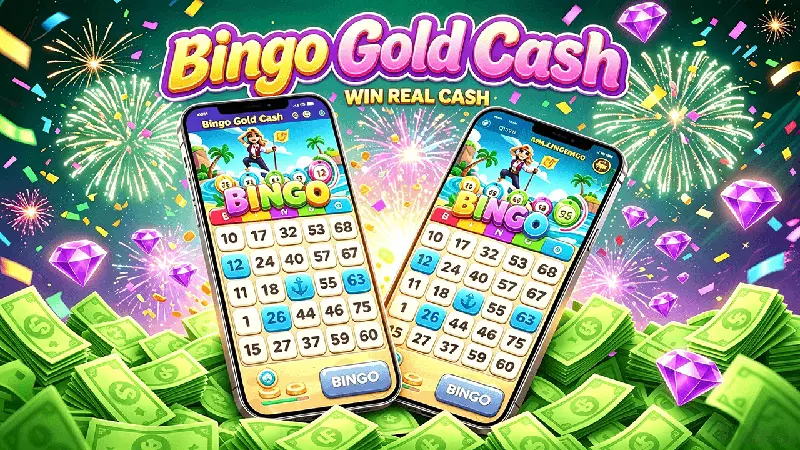
Bingo Gold Cash (BGC) delivers exactly that — not through a single scheduled tournament, but through a permanent 10-room ecosystem that functions as a continuous competitive ladder. Every room is a tournament stage. Every match is a bracket round. Every player is being seeded in real time by their own performance.
This guide explains the tournament logic inside BGC’s room structure, what separates it from traditional scheduled bingo tournaments, and how to climb the ladder strategically rather than randomly.
Why Traditional Bingo Tournaments Have a Design Flaw
Classic bingo tournaments — the kind you find at physical bingo halls or on legacy online bingo platforms — suffer from the same structural problem: they’re scheduled around luck-based games.
When the underlying game is random (random card assignment, random ball draw), a tournament doesn’t actually identify the best player. It identifies the luckiest player over a set period. The winner of a luck-based bingo tournament has demonstrated nothing except favorable variance. Any two randomly selected players would have equal expected outcomes over a large enough sample.
This is why skill-based bingo tournaments represent a categorically different product. In a skill-based format — where every competitor in a match receives the identical card, the identical ball sequence, and the identical power-up drops — the results are entirely determined by execution quality. Speed. Precision. Decision-making under time pressure.
BGC’s entire competitive architecture is built on this principle. And once you understand it, you start seeing every room not as “a game” but as a tournament round at a specific competitive tier.
How BGC’s skill-based format works
The BGC Competitive Ladder: 10 Rooms, One Continuous Tournament
BGC’s 10 rooms are not arbitrary. They form a coherent progression ladder where entry fees, prize structures, and implied field quality all increase together. Here’s how the tournament metaphor maps onto each stage:

Stage 1: Qualifier Rounds (Free Rooms)
Bonus Video Room — Free entry, top 80% win up to $5
Gems Video Room — Free entry, top 80% win up to 200 Gems
In traditional tournaments, qualifier rounds exist to filter unready players before they enter the competitive bracket. BGC’s free rooms serve the same function — but with a uniquely generous threshold. Finishing in the top 80% means only the bottom 20% of the field goes home empty-handed.
At this stage, the tournament is asking one basic question: Can you perform at a functional level? Players who can’t consistently finish in the top 80% here aren’t ready for the cash rooms. Players who can finish in the top 40–50% repeatedly have demonstrated enough baseline skill to advance.
What the qualifier stage reveals: Daub speed fundamentals. Power-up activation timing. Error frequency. These are the core technical metrics that determine competitive ceiling.
Stage 2: Group Stage — Tier 1 (Cash Rooms, $1)
Daily Match — $1 entry, top 4 of field win $2.40 / $1.40 / $1.20 / $0.50
Bingo Duel — $1 entry, single winner takes $1.80
The $1 rooms are where players enter real competitive stakes for the first time. Two distinct formats exist at this tier:
Daily Match mirrors a group-stage format — multiple players compete simultaneously, with the top 4 advancing to prize positions. The prize ladder is relatively flat (1st pays $2.40 vs. 4th’s $0.50), which means finishing anywhere in the top half of the paid field is meaningful. For players at this stage, the goal isn’t necessarily 1st — it’s consistency of paid finishes.
Bingo Duel mirrors an elimination-round format — one winner, no consolation prizes. This makes it the purest skill test at the $1 tier. There’s no prize for being “good enough.” You either win or you don’t. Players who want to stress-test their head-to-head competitive capability should use Bingo Duel as a benchmark.
What the group stage reveals: Whether your skills transfer under monetary pressure. Many players perform well in free rooms and regress in cash rooms because the psychological weight of real money triggers error-making behavior (hurried presses, premature BINGO calls). The $1 rooms are designed to expose this gap at minimal cost.
Stage 3: Group Stage — Tier 2 (Cash Rooms, $2.50)
Bingo Match — $2.50 entry, top 5 win $6.70 / $4.10 / $3.40 / $2.40 / $1.40
Bingo Match introduces a wider prize pool (5 paid places vs. 4 in Daily Match) while raising the entry fee to $2.50. This creates a more nuanced competitive dynamic: you’re competing harder for a larger 1st prize ($6.70) while simultaneously benefiting from a broader safety net (5th place still recovers $1.40 of your $2.50 entry — a 56% return even on a “poor” finish).
In tournament terms, this is the second group stage — where the field is generally stronger than the $1 rooms and the prize differential between 1st and 5th is significant enough to make position-fighting relevant. At the $1 level, whether you finish 1st or 4th is mildly important. At Bingo Match, the gap between 1st ($6.70) and 5th ($1.40) — a $5.30 spread on a $2.50 entry — makes every position meaningful.
The advancement benchmark: Players ready to leave Bingo Match for Cash Party are those who can demonstrate a consistent 1st or 2nd finish rate above 35–40% across at least 25–30 sessions. If your 1st/2nd rate is below 25%, the Cash Party field will extract money from you.
Stage 4: Semi-Final Stage (Cash Rooms, $5)
Cash Party — $5 entry, top 5 win $14.60 / $8.90 / $7.40 / $3.30 / $1.80
Cash Party is where bingo tournaments get genuinely intense. The prize differential is now substantial — 1st place ($14.60) pays nearly 8× the entry fee, while 5th place ($1.80) returns only 36% of entry. You can no longer afford to treat finishes as roughly equivalent.
At this stage, power-up sequencing becomes the primary competitive differentiator. The difference between a player who activates Double Score immediately upon receiving it versus one who holds it for a Multi-BINGO moment can translate to 500–1,000 points per game — easily the margin between 2nd and 4th place in a close field.
Three tactics that separate Cash Party competitors from Bingo Match graduates:
- Multi-BINGO setup discipline: In lower-stakes rooms, claiming a single BINGO immediately is usually fine. In Cash Party, holding the BINGO button for an additional 0.5–1 second to capture a second pattern in the same press is often worth 1,000–2,000 extra points. The discipline to hold is learned under pressure.
- Pick-A-Ball timing: Pick-A-Ball (which lets you choose your next called number) is most valuable when you’re one number from completing multiple patterns simultaneously. Using it early for a single-pattern completion is suboptimal at this level.
- Bonus Time deployment: Bonus Time (10 additional seconds, 3 extra balls) is best held until the final 20 seconds of a game. Using it mid-game when the score gap is unknown is generally wasteful.
Stage 5: Championship Round (Cash Rooms, $10)
Cash Skies — $10 entry, top 7 win $26 / $16 / $13 / $12 / $10 / $8 / $5
Cash Skies is BGC’s championship room. The prize pool structure is uniquely wide — 7 paid places — which paradoxically reflects the fact that the field at this level is so skilled that differentiating between 4th and 7th place requires sustained excellence, not a lucky individual game.
First place ($26) returns $16 profit on a $10 entry — a 160% return. Even 7th place ($5) recovers 50% of entry. This structure exists because the house knows that consistently placing 1st in a Cash Skies field means you’re among the top percentile of players globally. Very few players reach this room and cash out at a negative rate over 100+ sessions.
The true tournament test: Can you maintain your daub speed, power-up discipline, and error-avoidance simultaneously under the knowledge that every player across the table is at the same level? The psychological load of Cash Skies is categorically different from Bingo Match. Players who’ve rushed their way up the ladder discover this immediately.
The Parallel Gem Tournament Track
While the cash ladder represents BGC’s primary competitive structure, the Gem rooms constitute a parallel tournament track running on an alternative currency:
Gems Battle (20 Gems entry) → Big Gems (120 Gems entry) → Gems to Bonus (1,500 Gems entry, prizes in real USD: $3.50 / $2.20 / $1.80 / $0.70 / $0.50 / $0.30)
The Gem track mirrors the cash ladder exactly, but with a zero-cost entry point (Gems Video room is free). This creates a viable path for players who want to develop tournament-level skills without risking cash — and eventually convert their Gem winnings into real USD via the Gems to Bonus room.
For competitive players, the Gem track serves as a parallel practice ladder. Running both simultaneously (cash rooms for primary competition, Gem rooms for volume repetitions) accelerates skill development faster than either track alone.
The Psychology of Bingo Tournament Competition
Understanding the mechanical rules of BGC’s rooms is necessary but not sufficient. The psychological dimension of competitive play — especially as stakes increase — is where most players either grow or plateau.
The Regression Trap: After a string of 1st or 2nd finishes, many players “feel ready” for the next room tier and jump up prematurely. Tournament climbing is not about confidence; it’s about statistically demonstrated performance. A 5-game hot streak in Bingo Match is not evidence you’re ready for Cash Party. A 35%+ top-2 rate across 30+ sessions is.
The Tilt Cycle: In traditional gambling bingo tournaments, a bad game is a random event with no feedback loop. In BGC, a bad game contains recoverable information — you either made errors, mistimed power-ups, or encountered a better-prepared field. The competitive player’s response is analysis. The emotional player’s response is “running it back” immediately to recover losses, which compounds errors under elevated stress.
The Patience Advantage: BGC’s 90-second rounds mean sessions move fast. Players who can maintain consistent focus across 10, 15, or 20 consecutive rounds without deteriorating attention quality have a structural edge over those who fatigue mentally. This is the most underrated competitive skill in BGC’s tournament ecosystem.
Building Your Tournament Game Plan
Here’s a structured advancement framework for BGC’s competitive ladder:
| Tournament Stage | BGC Room | Entry | Advancement Benchmark | Key Skill Focus |
|---|---|---|---|---|
| Qualifier | Bonus Video / Gems Video | Free | Top 50% finish rate >80% | Daub speed baseline |
| Group Stage 1 | Daily Match / Bingo Duel | $1 | Paid finish rate >60% | Error avoidance |
| Group Stage 2 | Bingo Match | $2.50 | Top-2 rate >35% over 25+ sessions | Multi-BINGO setup |
| Semi-Final | Cash Party | $5 | Top-2 rate >35% over 25+ sessions | Power-up sequencing |
| Championship | Cash Skies | $10 | Positive EV over 50+ sessions | Full technical mastery |
The rule: you advance when your performance data says you advance, not when you feel ready. Keep a simple session log — room entered, finish position, profit/loss per session. After 25–30 sessions at any given room, your average finish position is a reliable indicator of your true skill level relative to that field.
How BGC Differs From Scheduled Bingo Tournaments
For players who’ve participated in scheduled bingo tournaments elsewhere, a few key distinctions to understand:
Always-on access: BGC’s tournament ladder runs continuously, 24/7. There’s no registration window, no elimination bracket, no tournament schedule to track. Every room is open whenever you want to compete.
Meritocratic advancement: In scheduled bingo tournaments, field composition is often random or open to any entrant at a fixed entry fee. In BGC’s ladder, field composition self-selects — Cash Skies naturally attracts experienced players because weaker players self-select out of $10 games. This means the competitive signal from each room is more reliable.
No variance hiding: In a short-format scheduled tournament (e.g., a single weekend event), luck can dominate even in skill-based formats simply due to small sample size. BGC’s continuous structure allows skill to express itself over large enough samples that variance averages out. The best player over 100 Cash Skies sessions will have measurably better results than an average player. This isn’t guaranteed over 10 sessions.
Withdrawing Your Tournament Winnings
As you climb BGC’s tournament ladder and accumulate earnings, withdrawal is straightforward:
- Minimum withdrawal: $5
- Method: PayPal (only)
- Processing time: 1–3 business days
- No fees: BGC does not charge withdrawal fees
The minimum withdrawal threshold means you can cash out small tournament winnings without waiting for large accumulations. A single strong Cash Party session ($14.60 for 1st) exceeds the threshold on its own.
Frequently Asked Questions
Q: Are BGC’s rooms actually skill-based bingo tournaments, or are they just regular games?
A: They’re genuine skill competitions. Every player in a BGC room receives the identical card, ball sequence, and power-up sequence. The winner is determined entirely by daub speed, power-up timing, and error avoidance — not by luck. This is the structural foundation of a real tournament, not a raffle with aesthetics.
Q: How many players typically compete in a single BGC room match?
A: Room size varies. Bingo Duel is 1v1. Daily Match typically includes 4–8 players. Cash Skies may have 7–15+ players, reflecting BGC’s wide-field championship structure.
Q: Can I play multiple rooms simultaneously?
A: No — BGC is a single-session format. Each 90-second round requires full attention. Attempting to split focus across multiple games would degrade performance significantly.
Q: What’s the best room to start with if I’ve never played competitive bingo before?
A: Start with Bonus Video or Gems Video (both free). Develop consistent top-50% finishes in free rooms before entering any cash room. The skill gap between free and $1 rooms is smaller than between $1 and $5, so build your foundation before investing.
Q: Is there a ranked leaderboard showing my standing across all BGC rooms?
A: BGC displays a live leaderboard during each match showing real-time ranking. Your tournament-style progression is tracked implicitly through your finish positions and earnings across sessions, though a global cross-room leaderboard is not currently displayed outside individual matches.
Conclusion: The Best Bingo Tournament Is Already Running
The traditional mental model of “bingo tournaments” — scheduled events, bracket draws, fixed registration windows — describes a format built around luck-based games. When the underlying game is skill-based, the tournament structure doesn’t need a calendar. It needs a competitive ladder where consistent performers earn the right to advance.
BGC’s 10-room ecosystem is the most sophisticated permanent bingo tournament structure available on mobile today. The rooms aren’t just game modes. They’re competitive tiers. The players at Cash Skies aren’t luckier than the players in Daily Match. They’re better. And the ladder between them is transparent, accessible, and navigable by anyone willing to develop genuine skill.
Your tournament starts the moment you open the app.
Bingo Gold Cash is available on iOS and Android. Entry fees range from free to $10. Cash withdrawals via PayPal only, minimum $5, processed in 1–3 business days. Skill-based competition — outcomes depend on player performance.