Bingo Online Free: Why Free Bingo Exists (and How to Play Without Getting Burned) in 2026
If you’ve ever typed “bingo online free” into a search bar, you’ve probably felt a flicker of skepticism. Free bingo? Online? A game that costs money in every church basement and casino hall across the country — suddenly free on your phone? It sounds like one of those “too good to be true” promises that invariably leads to a credit card form two screens later.
But here’s what most people don’t realize: free online bingo isn’t a trick. It’s a business model.
And understanding the difference — between a legitimate free-to-play platform and a predatory one dressed in “free” clothing — is the difference between finding a genuinely entertaining game and wasting your time on something designed to extract every possible dollar from you.
In this guide, we’ll explain the platform economics that make free online bingo possible, show you how to distinguish real free play from disguised pay-to-play, and walk through exactly how to get started with zero financial risk — using Bingo Gold Cash as the benchmark for what “good” looks like.
Why Traditional Bingo Costs Money (and Always Will)
To understand why free online bingo can exist economically, you first need to understand why traditional bingo can’t be free.
A physical bingo hall has fixed costs: rent, utilities, insurance, staff wages, equipment, card printing, and regulatory compliance. Every player adds incremental cost. At 100 players × $5 each = $500 gross, a hall might owe $200 to the landlord, $150 to staff, and the remaining $150 to prizes — leaving the operator with nothing. Free admission is economically impossible for physical bingo.
The Online Revolution: Zero Marginal Cost Changes Everything
Online bingo platforms operate under fundamentally different economics.
When a new player joins a digital bingo room, the incremental cost is essentially zero. No chair to set up. No card to print. No staff to pay overtime. The server infrastructure costs roughly the same whether 100 or 10,000 people are playing.
This doesn’t mean online platforms have zero costs. They pay developers, designers, servers, support, processing, and marketing. But these are fixed costs spread across the entire player base — the cost per individual game session is fractions of a cent.
That’s the insight: when serving one more player costs effectively nothing, giving away the core experience for free becomes viable — if you have a monetization model that doesn’t require every player to pay.
How Free Bingo Platforms Actually Make Money
There are three primary monetization models in free online bingo. Understanding them is how you separate the platforms that respect your time from the ones that treat it as a resource to extract.
Model 1: Ad-Supported (The Honest Model)
How it works: The platform shows you advertisements between games or in non-intrusive placements. Advertisers pay the platform for those impressions, and that ad revenue funds the free gameplay.
Economics: A single video ad view typically generates $0.01–$0.03 for the platform. If a free room session runs 90 seconds and the platform shows one ad before and one ad after, that’s $0.02–$0.06 in revenue per session — more than enough to cover the near-zero marginal cost of hosting that session.
Player experience: You play for free. The trade-off is your attention during ad breaks. You’re not being charged money — you’re trading a few seconds of attention for a full game experience.
The honest part: The incentives are aligned. The platform makes money when you play more, so they’re incentivized to create a good experience that keeps you coming back. They’re not incentivized to frustrate you into paying.
Model 2: Freemium (The Gray Zone)
How it works: The core game is free, but premium features — cosmetic items, extra lives, power-up packs, speed boosts — cost real money.
Problem: In a skill-based game, any premium item that affects gameplay creates a competitive imbalance. If Player A can buy an “auto-daub” upgrade and Player B can’t, the competition is no longer fair.
Player experience: You can play for free indefinitely, but you’ll consistently lose to players who pay. The game isn’t “free to win” — it’s free to be someone’s punching bag.
Model 3: Pay-to-Continue (The Predatory Model)
How it works: The game is free for a limited period — say, 5 games per day — then demands payment or an in-app purchase to continue playing.
The “energy” / “lives” / “tickets” mechanic: After your free allocation runs out, you wait hours for regeneration or pay to refill immediately. This is deliberately designed to create frustration that converts to purchases.
Player experience: You’re never truly playing for free. You’re in a loop designed to exhaust your patience and extract payment. The “free” label is technically true for your first 10 minutes, then the paywall descends.
Bingo Gold Cash: The Ad-Supported Model Done Right
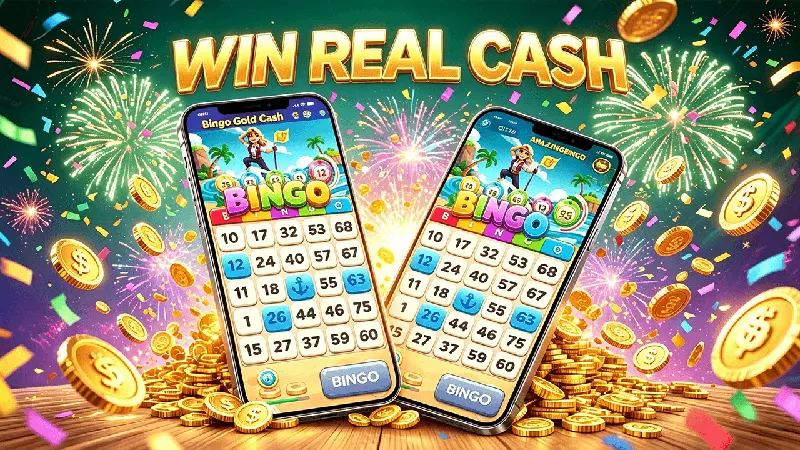
Bingo Gold Cash (BGC) operates two dedicated free rooms that serve as the entry point for all new players — and they’re genuinely free, with no energy meters, no ticket limits, and no hidden paywalls.
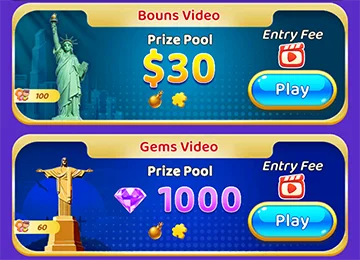
Bonus Video Room
- Entry fee: Free (ad-supported — watch a short video ad)
- Players: Up to 100 per session
- Winners: Top 80% of the leaderboard
- Prize: Up to $5 in real cash, paid via PayPal
- Competition level: Beginner-friendly
This room exists purely on the ad-supported model. BGC earns revenue from the ad you watch; you earn a shot at real cash prizes by playing skill-based bingo. The incentives are transparent and aligned: the more consistently you play, the more ad revenue BGC earns, and the more opportunities you have to win.
Gems Video Room
- Entry fee: Free (ad-supported)
- Players: Up to 60 per session
- Winners: Top 80% of the leaderboard
- Prize: Up to 200 Gems (in-game currency)
- Purpose: Gateway to the Gem Track economy
Gems won in this room can be used to enter Gems Battle (20 Gems), Big Gems (120 Gems), or accumulated toward Gems to Bonus (1,500 Gems), which pays real cash prizes — creating a completely free-to-cash pipeline.
This dual-track structure — ad-supported free rooms feeding into a cascading reward system — is why BGC represents the honest ad-supported model. There is no moment where the game says “you’ve played enough for free — pay up.”
How to Spot “Fake Free” Bingo — 5 Warning Signs
Before you download any “free bingo” app, scan for these five red flags. They’re the telltale signs that “free” is just bait.
1. Energy / Lives / Ticket Systems
If the app limits how many games you can play per day and offers to “refill” for real money, you’re not playing a free game — you’re in a monetization funnel. Genuinely free platforms don’t cap your play.
2. Pay-to-Compete Power-Ups
Watch what happens when you’re losing. Does the game offer to sell you a “boost” or “power-up” mid-game? In skill-based bingo, every player should have access to identical tools. If the playing field isn’t level by default, the business model is designed to make it un-level.
3. Withdrawal Minimums Above $25
A high withdrawal threshold is a form of hidden paywall. If you need to earn $25–$50 before you can cash out, the platform is betting you’ll either give up before reaching it or spend money chasing it. BGC’s $5 minimum withdrawal is an industry benchmark for accessibility.
4. Gift Card-Only Payouts (No Cash Option)
If the only way to “withdraw” your winnings is an Amazon or Google Play gift card, the platform is avoiding the cost and regulatory burden of real-money payout infrastructure. Cash payouts processed through PayPal or Apple Pay indicate a platform that takes its payment obligations seriously.
5. Dynamic Difficulty That Ramps After Free Period
Some platforms let you win easily during your first session — then suddenly, your winning patterns dry up. This “first one’s free” dynamic is casino psychology applied to mobile gaming. Test any platform across multiple sessions before depositing money.
The Free-to-Paid Transition: When (and Whether) to Move Up
Playing free bingo indefinitely is a perfectly valid choice. But if you’re curious about transitioning to paid rooms, here’s the framework for doing it without risk:
Stage 1: Master the Mechanics (Free Only — 50+ Sessions)
Spend at least 50 rounds in the Bonus Video and Gems Video rooms. Your goals during this phase:
- Build daub speed until it’s automatic
- Learn to track all four pattern types (Horizontal, Vertical, Diagonal, Four Corners) simultaneously
- Experiment with power-up timing in a zero-stakes environment
- Develop a consistent error rate below 5%
Stage 2: Test Low-Stakes Paid Rooms ($1 Entry)
Once your free-room performance is consistent, try Daily Match ($1 entry, 7 players) or Bingo Duel ($1 entry, head-to-head). The goal isn’t to make money — it’s to see how your skills hold up against paid-room competition without risking meaningful amounts.
Stage 3: Track Your Win Rate Over 20+ Paid Sessions
After 20 paid sessions, calculate your win rate. Are you placing in the money (top positions) in at least 35–40% of your games? If so, you have a positive expected value and can consider scaling stakes.
Stage 4: Scale Gradually
Move from $1 rooms to $2.50 (Bingo Match), then $5 (Cash Party), only when your win rate at each tier justifies the move. Never jump a tier because you’re “feeling lucky” — only because the data says you’re ready.
FAQ: Common Questions About Free Online Bingo
Q: Is free online bingo actually safe, or is it a scam?
A: Free online bingo is safe when you choose platforms with transparent monetization. Look for ad-supported models (not pay-to-continue), clear withdrawal policies, and payment processors like PayPal. Avoid apps that limit your free play with energy meters or push in-app purchases mid-game.
Q: Can you really win real money from free bingo games?
A: Yes — on platforms that use the ad-supported model. BGC’s Bonus Video room pays up to $5 in real cash to winners, funded by the advertising revenue the platform generates from your ad view. The platform gets paid by the advertiser; you get paid for your skill. No contradiction.
Q: What’s the catch with “free” bingo apps?
A: On honest platforms, the exchange is your attention during ad breaks. On dishonest platforms, “free” means “free to download, pay to continue.” The 5 warning signs — energy systems, pay-to-compete items, high withdrawal minimums, gift-card-only payouts, and dynamic difficulty — help you tell them apart.
Q: How many free games can I play per day?
A: On ad-supported platforms with no artificial limits, the answer is “as many as you want.” BGC imposes no daily cap on free room entries. You could play 50 rounds of Bonus Video in a session if you have the time and attention span.
Q: Do I need to enter payment information to play free bingo?
A: No. On legitimate free bingo platforms, you download the app, watch an ad, and start playing — no credit card, no PayPal login, no payment method required. You’ll need to link a payment method (PayPal or Apple Pay) only when you’re ready to withdraw winnings.
Q: Is the competition easier in free rooms than paid rooms?
A: Yes, free rooms attract more casual players and beginners, making them the ideal training ground. The jump to paid rooms will feel noticeably sharper.
The Bottom Line
“Bingo online free” isn’t a contradiction. It’s a business model made possible by the economics of digital platforms — near-zero marginal cost per player, combined with ad revenue, creates genuinely free gameplay.
The platforms worth your time make this model transparent. BGC tells you exactly how it works: watch an ad, play a round, compete on skill, win real prizes. Incentives aligned, playing field level, and you can play 100 free rounds without anyone pushing you toward a credit card form.
Free bingo exists. The question isn’t whether it’s real — it’s whether you choose a platform that respects the model or exploits it.
Choose the honest model. Start free. Build skill. Move to paid rooms only when your data tells you you’re ready — and never because a countdown timer is pressuring you.
⬇️ Download Bingo Gold Cash — Free on iOS & Android
Related Articles in This Series:
- Is Bingo Gold Cash Legit? An Honest Review 2026
- Free Bingo Games in 2026: What You’re Actually Getting (And Where the Real Prizes Hide)
- Free Bingo in 2026: How BGC’s Zero-Cost Rooms Build Real Skills — and Real Rewards
- Bingo Games Online Free: How to Find the Ones Actually Worth Your Time in 2026
External Links: