What Is a Daub in Bingo? The Complete Guide to Bingo Daub Mechanics, Speed & Accuracy (2026)
In traditional bingo, a daub is simple: you hear a number, you mark it on your card. In skill bingo — specifically in Bingo Gold Cash — the bingo daub is the single most important action you perform. It determines your score, your placement on the leaderboard, and ultimately whether you walk away with cash or chalk it up as practice.
If you’ve ever wondered why some players consistently outscore others despite everyone having the exact same board and ball sequence, the answer is almost always in the daub. This guide breaks down everything: what a daub is, how it’s scored, the speed-accuracy relationship, common mistakes that cost you money, and drills to build pro-level daub technique.
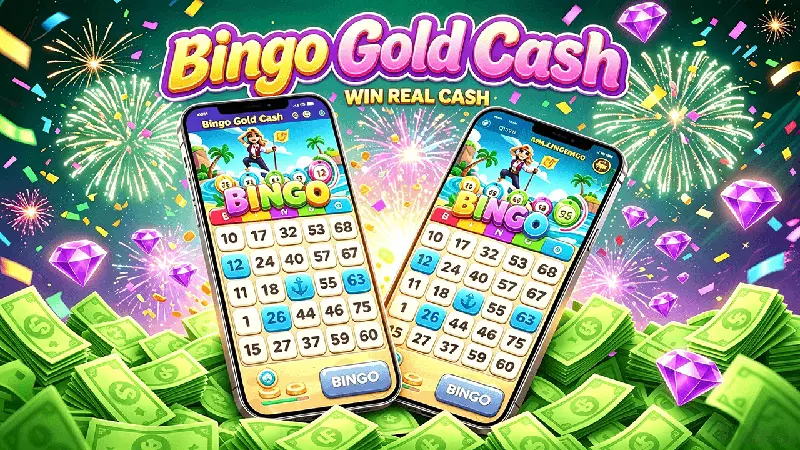
What Is a Daub in Bingo?
A daub is the action of marking a called number on your bingo card. In physical bingo halls, players use ink daubers — bottle-shaped markers that stamp a colored circle over each number. In digital bingo, you tap the number on your screen.
Why the daub matters in skill bingo:
In a luck-based bingo game, daubing is an afterthought — you just wait for your numbers and mark them when they come up. In skill bingo, the daub is your primary input. It’s how you translate speed, awareness, and decision-making into points. A fast, accurate daub produces 140 points per number. A sluggish, hesitant daub might only yield 100. That 40-point gap per daub compounds dramatically across 75 balls and can easily be the difference between first place and off the podium.
Key Concept: In Bingo Gold Cash (BGC), every player has the same board, the same ball sequence, and the same power-up sequence. The only variable is player execution — and execution starts with the daub.
Bingo Gold Cash Daub Scoring: How Points Are Calculated
In BGC, daub scoring is speed-correlated. The faster you daub after a number is called, the more points you earn:
| Daub Timing | Points Earned | Description |
|---|---|---|
| Immediate (fast tap) | 140 | Optimal — muscle memory and anticipation |
| Quick response | 120–130 | Good — attentive but not instantaneous |
| Delayed | 100–110 | Acceptable — still positive, but losing ground |
| Error Daub | −25 | Wrong number tapped |
| Error BINGO | −100 | False BINGO call triggered |
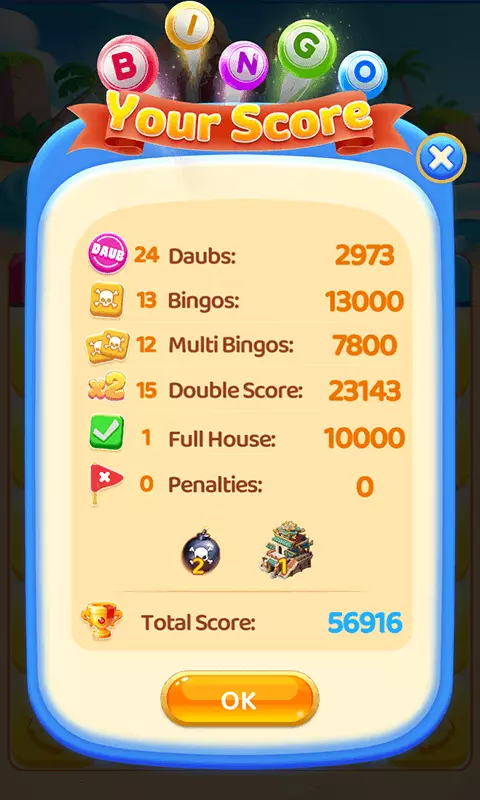
A full BGC round runs 90 seconds and draws up to 75 numbers. If a player daubs ~30 valid numbers per round and averages 140 points each, that’s 4,200 points from daubs alone. A player averaging 110 points on the same 30 daubs earns only 3,300 points — a 900-point deficit. Add in BINGO bonuses (1,000 points each) and Multi-BINGO multipliers, and the gap widens further.
Speed vs. Accuracy: The Fundamental Trade-Off
Every daub is a micro-decision between two competing goals:
- Speed: Tap the number as fast as possible to maximize the 140-point ceiling
- Accuracy: Tap the right number to avoid the −25 error penalty
The tension is real. Push speed too hard and you fat-finger a wrong number — that’s −25 points that negates the gain from being fast on the previous daub. Play too conservatively and you consistently leave 20-30 points on the table per daub, handing the win to faster players.
The optimal strategy: Build speed to the edge of your accuracy ceiling, then hold there. Your daub speed should be as fast as it can be without introducing errors. This ceiling moves upward with practice — what felt reckless in week one becomes automatic by week four.
The Break-Even Point
A single error daub (−25) wipes out the advantage of being fast on roughly one to two daubs. If speeding up adds 20 points per daub (going from 120 to 140), you need roughly 13 successful fast daubs to offset a single error. This math explains why most top players prioritize accuracy during early-round balls (when the board is dense and errors are more likely) and push speed during late-round balls (when fewer numbers remain and errors are harder to make).
Error Daubs: The Hidden Score Killer
There are two types of daub errors in BGC, and they have very different consequences:
Type 1: Standard Error Daub (−25 points)
Tapping a number that hasn’t been called. This is the more common error — it happens when:
- You misread a called number (e.g., tapping “43” when “34” was called)
- You tap a nearby number by accident (fat-finger on a dense board)
- You double-tap a number that was already daubed earlier in the round
Type 2: Error BINGO (−100 points)
Calling BINGO when no valid pattern has been completed. This is rarer but four times more costly. It typically happens when:
- You misidentify a pattern (e.g., thinking you have a diagonal when a number is missing)
- You’re pressing the BINGO button reflexively without confirming the pattern
- You lose track of which numbers have been called
The impact on leaderboard position: In a tight game where the top 5 finishers are separated by 500-1,000 points, a single error BINGO (−100) plus the missed opportunity to score legitimate points during that time can easily drop you from a winning position to out of the money.
How the Daub Interacts with BGC Power-Ups
BGC’s four power-ups don’t change the daub mechanic itself — but they change how and when your daubs generate maximum value:
| Power-Up | Daub Interaction | Strategic Implication |
|---|---|---|
| Wild Daub | Automatically daubs any one number on the board | Use to complete a pattern — saves the time/risk of a manual daub |
| Pick-A-Ball | Lets you select which number gets called next | Daub that number immediately for a guaranteed fast 140-point daub |
| Double Score | Doubles all points earned for a limited window | Every daub during this window is worth 200–280 points — push maximum speed |
| Bonus Time | Extends the round duration | More balls = more daub opportunities — maintain speed discipline through the extension |
The advanced interaction: During Double Score windows, the value of a fast daub doubles. A 140-point daub becomes 280 points. An error daub becomes −50 (the penalty also doubles). This amplifies both the reward and the risk — making it the highest-stakes window for daub quality.
How to Build Daub Speed: 4 Proven Techniques
Building daub speed is a function of three things: pattern recognition, muscle memory, and screen ergonomics.
1. Know the Number Layout Cold
The 75-ball BGC board uses a standard layout: B (1–15), I (16–30), N (31–45), G (46–60), O (61–75). The faster you can locate a number within its column, the faster you daub. Practice by calling out random numbers to yourself and tapping them on the screen — don’t wait for the game to call them.
2. Develop Peripheral Vision
The ball call appears in one area of the screen while your fingers hover over the board. Train yourself to read the called number peripherally so your eyes never leave the card grid. This eliminates the visual transition lag — the fraction of a second where your eyes move from the called-number display back to the board.
3. Optimize Your Grip and Hand Position
How you hold your device affects daub speed. For phone players, a two-thumb grip with the phone cradled in both hands gives you maximum tap coverage across the 5×5 grid. For tablet players, rest the device on a surface and use your dominant index finger — this sacrifices some speed for precision, which may be the right trade-off depending on your error rate.
4. The “Pre-Position” Technique
Between ball calls, keep your tapping finger/hand hovering over the center of the board (the FREE space area). From this neutral position, any number is at most two grid-squares away, minimizing travel distance. Avoid the common beginner habit of resting your hand at the bottom of the screen — that adds unnecessary travel time to every daub.
7 Common Daub Mistakes (and How to Fix Them)
| # | Mistake | Why It Happens | Fix |
|---|---|---|---|
| 1 | Fat-finger errors | Tapping adjacent number by mistake | Increase tap precision before speed — use fingertip, not thumb-pad |
| 2 | Over-reaching for speed | Pushing past accuracy ceiling | Benchmark your error-free speed ceiling weekly in free rooms |
| 3 | Neglecting the top row | Hand position too low on screen | Keep hand centered over the board, not at the bottom |
| 4 | Visual re-focus lag | Eyes darting between call area and board | Train peripheral vision — read calls without moving your gaze |
| 5 | Panic-tapping near BINGO | Rushing when one number away from a pattern | Breathe — a −100 error BINGO is far worse than a slightly slower daub |
| 6 | Ignoring late-round fatigue | Speed drops during the final 15-20 seconds | Practice in 2-3 consecutive rounds to build endurance |
| 7 | Not using free rooms for drills | Treating free rooms as “not real practice” | Free rooms are your laboratory — test speed limits here, not in paid rooms |
The Daub Practice Schedule: Free-Room Drills
Use BGC’s Bonus Video room (free entry) for dedicated daub practice. Here’s a 5-session progression:
| Session | Focus | Goal |
|---|---|---|
| 1 | Pure accuracy — ignore speed entirely | Zero errors for a full round |
| 2 | Moderate speed with zero errors | Consistent 120+ pt daubs, zero errors |
| 3 | Speed push — increase pace until first error, then back off | Find your current accuracy ceiling |
| 4 | Accuracy ceiling + 5% — operate at the edge | Sustain borderline speed without errors for 3 consecutive rounds |
| 5 | Full-game integration — daub + power-up + BINGO | Apply everything in a simulated real-game context |
Repeat this rotation weekly. Your accuracy ceiling will creep upward. What was “borderline” in week one will be “comfortable” by week four.
Frequently Asked Questions About Bingo Daub
Q: What does “daub” mean in bingo?
A: “Daub” refers to marking a called number on your bingo card. In physical bingo, players use a dauber (an ink marker). In digital skill bingo apps like Bingo Gold Cash, you daub by tapping numbers on the screen. The speed and accuracy of your daubs directly determine your score.
Q: How many points is a fast daub worth in Bingo Gold Cash?
A: The fastest daubs earn 140 points each. Average-speed daubs earn 100-130 points. The exact value is speed-correlated — the faster you tap after a number is called, the higher the point value.
Q: What happens if I daub the wrong number?
A: Tapping a number that hasn’t been called costs you −25 points (an “error daub”). Calling BINGO when you don’t have a valid pattern costs −100 points (an “error BINGO”). Both penalties come directly out of your round score.
Q: Is daub speed more important than power-up strategy?
A: Daub speed is the foundation. Power-ups multiply the value of your daubs (especially Double Score), but if your base daub speed is poor, the multiplier has less to work with. Build daub speed first, then layer in power-up timing. Most players who plateau do so because their daub speed hasn’t improved in weeks.
Q: How long does it take to get fast at daubing?
A: Most players see measurable improvement within 5-10 dedicated practice sessions (using free rooms). Noticeable speed gains — the kind that move you up the leaderboard — typically take 2-4 weeks of consistent play. The physical motion of tapping is quick to learn; what takes time is building the number-recognition speed and peripheral vision that eliminate the cognitive lag between “hear the number” and “find it on the board.”
Q: Do different devices affect daub speed?
A: Yes. Phone screens with a two-thumb grip tend to produce the fastest daub times because each thumb only needs to cover half the grid. Tablets offer more precision but require slightly more hand travel. The difference is small — device optimization matters less than practice consistency.
Conclusion: The Daub Is Where Skill Bingo Begins
If skill bingo has a single truth, it’s this: the daub is where skill lives. Strategy guides, power-up combos, room selection — all of that builds on top of the daub. If your foundation is shaky, nothing you stack on top of it matters.
The good news: daub speed is the most trainable skill in BGC. It’s purely mechanical. It improves with deliberate practice. It doesn’t require game knowledge, pattern awareness, or strategic thinking — just repetition, focus, and a willingness to push your speed ceiling in free rooms before betting real money.
Spend your first week focusing on nothing but daub quality. You’ll be surprised how far it takes you.
⬇️ Download Bingo Gold Cash — Free on iOS & Android
Related Articles in This Series:
- Bingo Scoring Strategy: Daub Speed, BINGO Stacking & Full House
- Bingo Apps: Inside BGC’s 4 Power-Ups
- Bingo Tips: The 12-Point BGC Skill Cheat Sheet
- Bingo Strategies: Advanced Toolkit for the Top 10%
- Skill Bingo: The Complete Guide to Skill-Based Bingo
External Links: