Bingo Rules in 2026: The Skill-Based Bingo Rulebook Every Player Needs
Most “bingo rules” articles teach you a game you’ll probably never win.
That’s not hyperbole. Traditional bingo rules — the kind found in every bingo hall since the 1920s — describe a pure chance game. The numbers are drawn randomly. Your card is different from everyone else’s. If you win, it’s luck. If you lose, it’s probability. You can play for 50 years and never improve by a single percentage point.
But in 2026, searching “bingo rules” without specifying which version you’re playing is like asking for “the rules of football” without clarifying whether you mean soccer, American football, or Australian rules. The rules are fundamentally different.
Skill-based bingo — the format used by Bingo Gold Cash (BGC) — has its own rulebook. It shares the 75-ball grid and the pattern system, but every other layer of the rules has been rebuilt around one principle: the better player should win more often.
This guide covers both. First, the traditional 75-ball bingo rules you need as a foundation. Then, the BGC-specific rules that actually determine whether you win or lose.
Traditional 75-Ball Bingo Rules — The Foundation
Before you can understand what skill-based bingo changes, you need to know what it inherited.
The Card
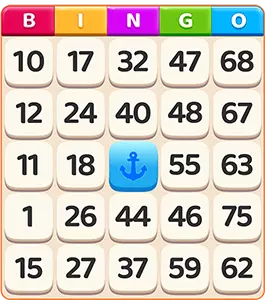
A standard 75-ball bingo card is a 5×5 grid. Each column is labeled with a letter from the word B-I-N-G-O:
| Column | Number Range | Count |
|---|---|---|
| B | 1–15 | 5 numbers |
| I | 16–30 | 5 numbers |
| N | 31–45 | 4 numbers + FREE space (center) |
| G | 46–60 | 5 numbers |
| O | 61–75 | 5 numbers |
The center square is a FREE space — automatically marked for every player. Total: 24 numbered squares + 1 FREE = 25 squares.
The Draw
A caller (or, in digital bingo, the game engine) randomly draws numbers from 1 to 75 one at a time. Each number is announced, and players mark (“daub”) matching numbers on their cards. There is no time limit per draw in traditional bingo — play continues until someone completes the target pattern.
The Patterns
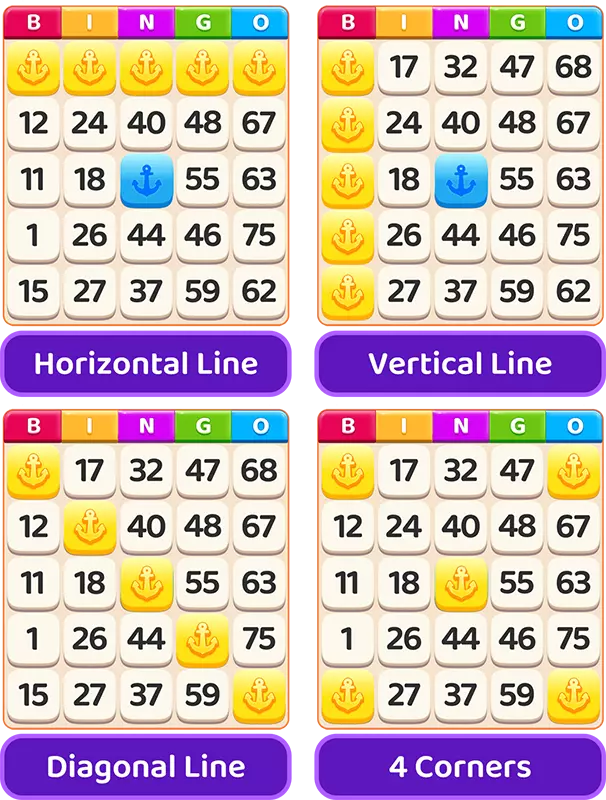
In 75-ball bingo, you win by completing a pre-announced pattern on your card. The four standard patterns used in BGC are:
- Horizontal Line: Any complete row across (5 possible lines)
- Vertical Line: Any complete column down (5 possible lines)
- Diagonal Line: Either the top-left to bottom-right diagonal or the top-right to bottom-left diagonal (2 possible lines)
- Four Corners: All four corner squares marked (1 possible pattern)
Winning in Traditional Bingo
When a player completes the pattern, they call “BINGO!” The game pauses, the card is verified, and prizes are awarded. In most traditional formats, only the first player to call BINGO wins — everyone else gets nothing, even if they were one number away.
This is the first rule that skill-based bingo completely rewrites.
How Skill-Based Bingo Rewrites the Rulebook — The BGC Rules
BGC keeps the 75-ball format and the four pattern types. Almost everything else is different. Here are the three rule changes that matter most.

Rule Change #1: Everyone Gets the Same Board
In traditional bingo, every player holds a different card. Some cards are “luckier” than others because their number distribution happens to match the early draws better. This is why traditional bingo strategy revolves around card selection — Granville’s theory, Tippett’s theory, all of it assumes you can pick a better card than someone else.
In BGC, every player in the same match receives the identical board. The same 24-number grid. The same FREE space. No card selection advantage exists.
Why this changes everything: If everyone has the same card, the only variable is how you play it. Daub speed, power-up decisions, BINGO timing — these become the only differentiators.
Rule Change #2: The Same Ball Sequence for Everyone
In traditional bingo, balls are drawn randomly and independently — each draw is unpredictable. You need luck for your numbers to come up early.
In BGC, every player sees the exact same ball sequence in the exact same order. Ball #1 for you is ball #1 for everyone. Ball #47 for you is ball #47 for everyone. The sequence is pre-generated and identical across the entire match.
Why this changes everything: If you know that everyone is reacting to the same numbers at the same time, the game becomes a competition of execution speed and decision-making — not a competition of who happened to get their numbers called earlier. This is the single rule that transforms bingo from gambling into a skill game.
Rule Change #3: The Same Power-Up Sequence
In BGC, power-ups appear at the same times, in the same order, for every player. When a Wild Daub drops for you at second 38, it drops for every opponent at second 38. When Bonus Time triggers at second 72, everyone gets those extra 10 seconds simultaneously.
This means power-up strategy is universal. You can’t get “lucky” with an early Wild Daub — everyone gets the same tools at the same moments. What separates winners is who uses them better.
BGC Scoring Rules — Beyond Daubing Numbers
The BGC scoring system is where BGC’s rulebook diverges most dramatically from traditional bingo. Understanding these rules is the difference between finishing top 4 and finishing outside the money.
Base Daub Scoring: 100–140 Points
Every correct daub earns between 100 and 140 points. The score is speed-dependent: the faster you daub after a number is called, the higher your points. If you daub immediately when the ball appears, you’ll get the maximum 140 points. Hesitate for a second, and you’ll drop toward 100.
Critical rule: Daub score isn’t just about points — it also fills your power-up gauge faster. Faster daubs = more power-up charges per game. Two players who daub every number correctly will have different power-up counts if one is consistently faster.
BINGO: 1,000 Points
When you complete any of the 13 possible patterns (5 horizontal + 5 vertical + 2 diagonal + Four Corners), a BINGO button appears. Pressing it awards a flat 1,000 points regardless of speed. But here’s the first strategy rule embedded in the scoring system:
You can delay pressing BINGO.
This is counterintuitive for traditional bingo players. In traditional play, calling BINGO immediately is always correct — if you don’t, someone else might and you get nothing. In BGC, the BINGO button stays available until you press it (within the same 90-second round). This creates a strategic choice: cash out immediately for 1,000 points, or keep daubing to build toward additional patterns.
Multi-BINGO: The Stacked Payout Rule
If you complete multiple patterns during the same round and THEN press BINGO, you get a multiplier on your BINGO score. Two patterns at once pays substantially more than pressing BINGO twice separately. Three patterns pays even more.
This is BGC’s most important scoring rule and the one that creates the biggest gap between casual and competitive players. A player who identifies overlapping pattern opportunities and delays their BINGO call to stack multiple patterns will consistently outscore someone who presses BINGO as soon as it appears.
Full House: 10,000 Points
Completing all 24 numbered squares on your card (a “Full House” or “blackout”) awards 10,000 points — 10× the value of a single BINGO. This is the highest-scoring single event in the game and typically guarantees a top finish.
Error Penalties: -25 and -100 Points
BGC has two penalty rules every player needs to memorize:
- Error Daub (-25 points): Daubing a number that hasn’t been called. This typically happens when you misread the board or tap in the wrong spot under time pressure.
- Error BINGO (-100 points): Pressing the BINGO button when you haven’t actually completed a pattern. This usually happens when a player mistakes a near-miss for a completed line.
Penalties compound quickly. Three error daubs (-75 points) in a match essentially negates a full BINGO’s worth of advantage over a clean player. In a game where winners and losers are often separated by 200–400 points, penalty avoidance is a scoring rule as important as any bonus opportunity.
| Scoring Event | Points | Notes |
|---|---|---|
| Correct Daub | 100–140 | Speed-dependent: faster = higher score |
| BINGO (single) | 1,000 | Per completed pattern |
| Multi-BINGO | 1,000+ | Stacked patterns earn bonus multiplier |
| Full House | 10,000 | All 24 squares + FREE space completed |
| Error Daub | -25 | Daubing an uncalled number |
| Error BINGO | -100 | False BINGO button press |
BGC Power-Up Rules — The Strategic Layer
BGC gives every player four power-up types, but the rules around how they work — and how many you can hold — create the game’s strategic depth.
Power-Up Capacity Rule: Maximum 2 Held
You can hold up to three power-ups at any time. If your gauge fills and you’re already at capacity, the charge is wasted. This creates a clear strategic rule: never sit at full capacity. If you have 2 power-ups stored, you are actively losing value with every daub.
Wild Daub
What it does: Automatically daubs the next uncalled number you need to complete a pattern. One-time use.
Timing rule: Wild Daub is most valuable when you are one number away from completing a pattern. If you use it when you’re three numbers short, it only advances you by one square — you still need two more numbers. If you use it when one square remains, it triggers an immediate BINGO opportunity.
Common rule violation: Using Wild Daub before you have 3+ daubs to fill your gauge, leaving you without a power-up when you need it later. Treat Wild Daub as a closing tool, not a progression tool.
Pick-A-Ball
What it does: Lets you select one specific number to call next, regardless of the ball sequence. One-time use.
Timing rule: Pick-A-Ball is a pattern-finishing tool, not a random number generator. Use it to complete a pattern that’s one square short — ideally a pattern that overlaps with another nearly-complete pattern for Multi-BINGO potential. Using Pick-A-Ball early in a round to fill a random square is almost always a waste.
Double Score
What it does: Doubles all points earned for 10 seconds after activation.
Timing rule: Activate Double Score when you anticipate high daub density — moments when multiple called numbers are clustered on your board. The worst time to use Double Score is during a lull with no numbers to daub. Count your visible numbers before activating: if fewer than 3 daubable numbers are on the board, wait.
Bonus Time
What it does: Adds 10 seconds to the current round, during which 3 additional balls are called.
Timing rule: Bonus Time extends the round beyond the standard 90 seconds, but those extra balls follow the same sequence for everyone. The strategic value is highest when you’re close to completing a pattern or Full House. Using Bonus Time when you have no near-complete patterns adds 10 seconds of low-value daubing — better to save it for a round where you’re one or two squares from a big score.
BGC Room Rules — Entry, Prizes, and Winner Selection
BGC has 10 rooms, and each has its own entry rules and prize structures. Here’s what matters:
Entry Fee Rules
- Cash rooms: $1.00 (Daily Match, Bingo Duel), $2.50 (Bingo Match), $5.00 (Cash Party), $10.00 (Cash Skies)
- Gem rooms: 20 Gems (Gems Battle), 120 Gems (Big Gems), 1,500 Gems (Gems to Bonus)
- Free rooms: Bonus Video (free, prizes up to $5), Gems Video (free, prizes up to 200 Gems)
Your entry fee is deducted when you join a room. If you leave before the round starts, it’s refunded. Once the round begins, the entry is committed.
Winner Selection Rules
Unlike traditional bingo, where only the first BINGO caller wins, BGC pays multiple positions in every room:
| Room | Entry | Winners Paid | Top Prize |
|---|---|---|---|
| Daily Match | $1.00 | Top 4 | $2.40 |
| Bingo Duel | $1.00 | Top 1 | $1.80 |
| Bingo Match | $2.50 | Top 5 | $6.70 |
| Cash Party | $5.00 | Top 5 | $14.60 |
| Cash Skies | $10.00 | Top 7 | $26.00 |
| Gems Battle | 20 Gems | Top 4 | 50 Gems |
| Big Gems | 120 Gems | Top 6 | 400 Gems |
| Gems to Bonus | 1,500 Gems | Top 6 | $3.50 |
| Bonus Video | Free | Top 80% | Up to $5 |
| Gems Video | Free | Top 80% | Up to 200 Gems |
Rule of thumb: More winners paid = more forgiving for mid-tier play. Fewer winners paid = rewards concentrated at the top, favoring high-skill players. Bingo Duel pays only 1st place — it’s the most punishing room. Bonus Video pays the top 80% — it’s the most forgiving.
Withdrawal Rules and Payout Mechanics
Minimum Withdrawal: $5.00
You cannot withdraw less than $5.00. Your balance must reach this threshold before a payout request is accepted.
Payment Method: PayPal and Apple Pay
BGC processes withdrawals through PayPal and Apple Pay. No other payment methods are currently supported.
Processing Time: 1–3 Business Days
Withdrawals are processed within 1–3 business days. Weekend requests typically begin processing on the next business day.
Rake: 10%–20%
BGC retains 10%–20% of the total entry pool as a platform fee (rake). The remaining 80%–90% is distributed among winners. This is comparable to skill-gaming industry standards and significantly lower than traditional casino bingo rake rates.
5 Bingo Rules Myths That Cost Players Money
These are rules players think exist in skill-based bingo — but don’t.
Myth 1: “Better Cards Win More Often”
Reality: Every player in BGC has the same card. Card selection does not exist as a strategy. If you’re spending mental energy thinking about card quality, you’re ignoring the only thing that matters: execution.
Myth 2: “Calling BINGO Immediately Is Always Correct”
Reality: Delaying BINGO to stack multiple patterns (Multi-BINGO) can double or triple your BINGO payout. The skill is knowing when to delay and when to cash out.
Myth 3: “Speed Doesn’t Matter If You Daub Everything”
Reality: Faster daubs = higher per-daub scores (up to 140 vs. 100 minimum) AND faster power-up gauge filling. A player who daubs every number correctly but slowly will have fewer power-ups and lower scores than a faster player with identical accuracy.
Myth 4: “Power-Ups Should Be Used Immediately”
Reality: Power-up timing is the highest-ceiling skill in BGC. Using Double Score during a daub drought wastes it. Using Wild Daub when you’re three numbers from a pattern advances you by one square — a marginal gain. Saving power-ups for high-impact moments consistently outperforms immediate-use habits.
Myth 5: “The Free Rooms Don’t Matter”
Reality: Bonus Video and Gems Video are zero-cost practice environments where you can drill daub speed, pattern recognition, and error avoidance without financial risk. Players who skip free rooms miss the cheapest skill development available.
Frequently Asked Questions
What are the basic rules of bingo?
Traditional bingo uses a 5×5 card with numbers 1–75. Numbers are called randomly, and players daub matching squares. The first player to complete a pre-announced pattern (line, diagonal, or four corners) wins. In skill-based bingo like BGC, all players share the same card and ball sequence, making the rules about execution speed and strategy rather than luck.
How is Bingo Gold Cash different from regular bingo?
The core difference is that BGC operates on skill-based rules: every player receives the same board, same ball sequence, and same power-up sequence. In regular bingo, different players have different cards and wins depend on random number matching. In BGC, wins depend on daub speed, power-up timing, and Multi-BINGO strategy.
What is the most important BGC rule to remember?
The Multi-BINGO rule: delaying your BINGO call to complete multiple patterns simultaneously yields dramatically higher scores than pressing BINGO as each individual pattern completes. This single rule separates top-10% players from the field.
Can you withdraw real money from Bingo Gold Cash?
Yes. Withdrawals are processed via PayPal or Apple Pay with a $5.00 minimum. Processing takes 1–3 business days. You must have earned enough through cash room wins (or converted Gems via the Gems to Bonus room) to reach the $5.00 threshold.
What are the rules for power-ups in BGC?
You can hold up to 3 power-ups simultaneously (Wild Daub, Pick-A-Ball, Double Score, Bonus Time). If your gauge fills at capacity, the extra charge is wasted — so never sit at 3/3. Each power-up has optimal timing rules: Wild Daub is best as a pattern closer, Double Score should be used during high daub-density moments, Pick-A-Ball is a precision finishing tool, and Bonus Time is most valuable when near pattern completion.
Bottom Line
Bingo rules in 2026 break into two categories: the rules everyone knows (75-ball grid, 5×5 card, four pattern types) and the rules that actually determine who wins (identical board, same ball sequence, Multi-BINGO stacking, power-up capacity management, error penalties).
If you’re playing by traditional rules in a skill-based game, you’re playing a different game than the winners are playing — and the scoreboard will reflect that difference every single round.
⬇️ Download Bingo Gold Cash — Free on iOS & Android